
The evolution of voice reservation systems has reinvented the way we manage our time. The
This technology represents a significant change in personal and professional productivity, especially for those who manage multiple daily commitments. Integrating these tools into the daily routine not only saves time, but significantly reduces errors in appointment management and improves efficiency in time management.
How an AI-powered voice assistant transforms your calendar management
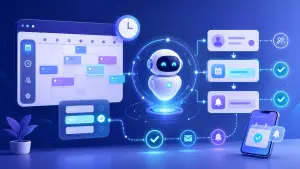
Voice assistants with AI have transformed the way we manage calendars and agendas, enabling a more fluid and natural organization of our time. Voice recognition technology, combined with intelligent algorithms, makes it possible to coordinate multiple calendars, detect schedule conflicts and suggest the best times to schedule meetings.
The integration of these voice-driven virtual assistants with platforms such as Google Calendar or Microsoft Outlook allows complex tasks to be performed using simple commands. For example, scheduling a recurring weekly meeting with the sales team is as simple as saying “schedule a meeting every Monday at 10 o’clock with the sales team”. The system automatically takes care of checking the availability of the participants and sending the corresponding invitations.
One of the most outstanding advantages of voice reservation systems is their adaptive learning capabilities. The assistant memorizes preferences and scheduling patterns, proactively suggesting times based on meeting history. In addition, the AI can prioritize appointments according to their importance, manage cancellations and rescheduling, and even propose alternatives when it detects overlaps in the schedule.
Appointment scheduling AI technology also stands out for its ability to integrate with other digital services. It can synchronize with transportation applications to calculate travel times, weather services to anticipate weather conditions that may affect face-to-face meetings, or videoconferencing systems to automatically generate remote connection links.
Benefits of reservations with automated voice commands
The benefits of voice command booking go beyond simple convenience. This technology significantly reduces the time spent on administrative tasks, allowing users to manage their commitments without interrupting other activities or when they have their hands full.
Speech systems for reservations eliminate common errors in manual scheduling, such as duplicate appointments or scheduling conflicts. Today’s speech recognition accuracy rates exceed 95%, ensuring accurate transcription of dates, times, and reservation details.
Accessibility is another outstanding benefit of automated voice commands. People with visual or motor limitations can manage their agenda autonomously, while those who find traditional systems complicated discover a more natural and intuitive way to organize their appointments.
Time management efficiency is greatly enhanced by the multitasking capabilities offered by voice command reservations. The system can confirm availability, send reminders and update shared calendars, all while the user continues with their core activities. In addition, reducing the stress associated with manual diary management contributes to a more productive and healthy work environment.
How voice-activated virtual assistants improve your productivity
Virtual voice assistants have become indispensable allies for maximizing work and personal efficiency. Their ability to process and execute commands while performing other tasks multiplies our productivity, allowing true multitasking without sacrificing work quality.
The time savings are significant when we use these assistants to manage our communications. A recent study revealed that professionals can save up to 3 hours per week by delegating routine tasks to their virtual assistant. Integrating voice booking systems with other productivity tools further enhances their effectiveness. These assistants can coordinate shared calendars, set smart reminders and prioritize tasks according to their urgency and importance. The ability to manage multiple aspects of our schedule using voice commands eliminates the need to switch between different applications or interrupt our workflow.
Virtual assistants also stand out for their ability to learn and adapt to our work habits. By analyzing behavioral patterns, they can anticipate needs and suggest optimizations in our routine, such as regrouping similar meetings or identifying the most favorable times of the day for specific tasks. This progressive personalization turns the assistant into a true enhancer of our personal efficiency.
Advantages of ia automated call intake for appointments
Automated call answering with AI represents a significant advance in appointment management and customer service. This system not only handles calls 24/7, but understands the context of each conversation and handles booking requests with accuracy comparable to that of a human receptionist.
Natural language processing enables these systems to have smooth and natural conversations with customers. AI analyzes tone of voice, preferences mentioned and previous history to deliver a personalized experience. For example, it can remember that a customer prefers evening appointments or often needs additional reminders.
Call automation eliminates the bottlenecks typical of traditional inbound. AI can handle multiple simultaneous calls, reduce waiting times and minimize lost business opportunities due to unanswered calls. In addition, the system automatically records each interaction in the database, facilitating subsequent tracking and analysis.
An outstanding advantage of automated inbound calling is its ability to integrate with other management systems. AI can automatically synchronize appointments with digital calendars, send confirmations by SMS or email, and update availability in real time. This interconnection ensures consistent and duplicity-free management across all booking channels.
Integration of voice systems for reservations in day-to-day management
The incorporation of voice reservation systems into daily routines is transforming the way professionals and companies manage their schedules. These systems are adapted to different sectors, from medical practices to restaurants, optimizing booking processes and reducing the administrative burden.
The true potential of this technology is revealed in its capacity for personalization. The systems learn from each interaction and adjust to the specific needs of each business. As was the case in one dental clinic, where the system detected that patients tended to prefer appointments on Tuesday afternoons, and began to proactively suggest these times, increasing customer satisfaction and reducing cancellations.
Integration with other business systems significantly expands their utility.
– Automatic synchronization with multiple calendars
– Management of personalized reminders
– Real-time availability update
– Reserve pattern analysis
The flexibility of these systems allows for gradual implementation, facilitating the transition from traditional methods without disrupting day-to-day operations. AI technology for scheduling appointments not only simplifies reservation management, but also provides valuable data on usage patterns and customer preferences, enabling continuous service improvements.