
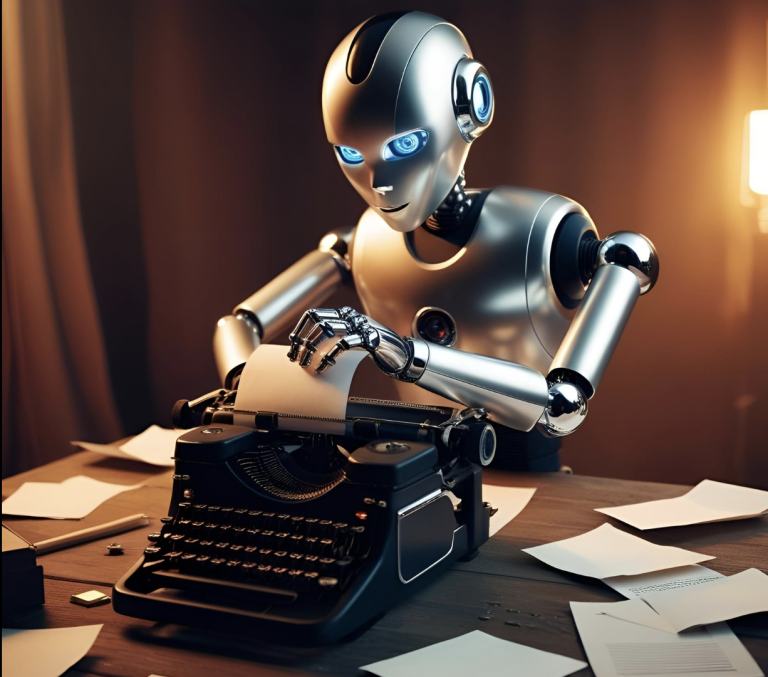

The evolution of AI tools for writing video scripts is transforming the way creators approach their content. From small channels to established production companies, more and more professionals are exploring these technologies to streamline their workflow and boost their creativity. The debate over whether AI can match or surpass human ability to create captivating scripts generates mixed opinions in the creative community.
Imagine spending hours writing, recording and editing videos for years… and suddenly you discover that the most successful script on your channel was written with the help of an AI. Maybe you thought, “well, I’ll do it as an experiment and see how it goes”. Well, in the end the experiment worked. And this is where the real debate begins today: are we facing the future of scripts on YouTube… or the beginning of the end of the human touch?
Next, we’ll look at how AI tools are revolutionizing the way we write scripts, their current advantages and limitations, and explore real-world cases that prove their potential. We will also address the future of this technology and how it could definitely change the landscape of content creation on YouTube. The secret is to understand how to take advantage of these tools without losing that authenticity and connection that viewers are looking for.
Benefits of using AI for YouTube scripts
AI tools for writing video scripts are transforming the way content creators work. The ability to generate ideas and narrative structures in a matter of seconds saves hours of work, especially in the initial brainstorming and content outlining phase. ChatGPT and similar AIs can propose different approaches to the same topic, helping to explore angles we might not have considered on our own.
One of the biggest benefits is consistency in tone and style. AI can maintain a uniform narrative voice across multiple scripts, which is especially useful for channels that publish content on a daily basis. In addition, these tools are programmed to follow proven structures that maintain viewer engagement, such as effective opening hooks or strategically placed calls to action.
SEO optimization is another strength of AI. Today’s systems can naturally incorporate relevant keywords and suggest titles and descriptions that improve video ranking on YouTube. They also help maintain proper script length, considering the platform’s algorithm preferences and audience retention patterns.
Data analytics is an additional advantage: AI can process information on trends and metrics of similar videos to recommend topics and approaches with a higher probability of success. This ability to predict the potential performance of content is invaluable for optimizing resources and maximizing the impact of each video produced.
Current limitations of AI for content
The current technical limitations of AI for generating video scripts become apparent when analyzing content that requires emotional depth or subtle connections. AI can structure basic content, but has difficulty capturing cultural nuances, contextual humor or references that require human understanding. This is especially noticeable in specific niches where specialized knowledge and hands-on experience are a must.
A significant obstacle is that AIs lack real, contextual experience. While a content creator can speak from his or her own experience, AI can only reorganize existing information without providing insights based on direct experience. This limit is most visible in content that requires authenticity and personal perspectives, such as blogs or self-improvement stories.
Truly original creativity is still human territory. While AI can combine existing elements in interesting ways, it cannot yet generate new ideas or make unexpected connections that characterize viral content. AI-generated scripts tend to be schematic and predictable, which can result in content that sounds contrived or unoriginal.
Managing information that is up to date represents another major challenge. IAs train on historical data and can generate outdated or inaccurate information, especially on rapidly evolving topics such as technology or social trends. This forces a thorough human review that can be as time consuming as writing the script from scratch.
Comparison between AI and human scripts
The comparison between scripts written by AI and humans reveals significant differences in several aspects. AI scripts stand out for their technically perfect structure, following proven patterns and optimizing elements such as length or keywords. However, they lack that personal touch that makes a video connect naturally with the audience.
In terms of efficiency, AI can generate a basic script in seconds, whereas a human copywriter might need hours. But this speed comes at a cost: automated scripts often sound generic and lack the creative spark that characterizes viral content. An experienced creator knows when to break the established rules to surprise their audience, something AI doesn’t yet know how to mimic.
The main differences can be summarized as follows:
– Tone and personality: Humans shine in creating a unique and recognizable voice.
– Contextualization: AI may miss important cultural references
– Practical experience: Only humans can share real experiences
– Adaptability: creators adjust the script according to real-time feedback
The solution to this problem lies in finding a balance. Using AI to write video scripts can speed up the creative process, but the human touch is still essential to transform technically correct copy into content that really connects with the audience.But the human touch is still essential to transform technically correct text into content that really connects with the audience. The best strategy combines the efficiency of automation with the creativity and empathy that only a human can bring.
Success stories of AI writing video scripts
Several examples demonstrate how AI is revolutionizing script creation for YouTube. The educational channel “Science Explained” reported a 40% increase in views after implementing a combination of AI-generated scripts and human editing. Its methodology involves using AI to research and structure complex scientific information, while the editorial team adapts the tone and adds practical examples.
The case of “Daily Tech Tips” is particularly interesting. This channel managed to increase its publication frequency from two to five videos per week while maintaining the quality of the content. This success was caused by using AI to generate the first drafts of their scripts, allowing the creative team to focus on polishing the content and adding their specific technical expertise.
In entertainment, YouTuber Mark Thompson’s experiment stands out for its originality. He created two versions of the same video: one scripted entirely by AI and one with a traditional script. Surprisingly, the AI version got 15% higher audience retention, although comments noted that it sounded “more structured but less personal.”
These cases confirm that AI can be a valuable ally in writing video scripts, especially in informative or educational content. However, success lies in finding the right balance between the efficiency of automation and the human touch that makes each channel unique.
Future of the use of AI in screenwriting
The future landscape of AI in scriptwriting promises significant changes in the digital content industry. New generations of language models will incorporate multimodal capabilities, making it possible to analyze visual and auditory trends to create scripts that are more tailored to the audiovisual format. This evolution will allow AI to not only write the text, but also suggest specific visual elements and transitions.
Personalization will reach new levels thanks to continuous learning. AIs specialized in writing video scripts will be able to adapt to the specific style of each creator, learning from their habitual expressions, narrative preferences and feedback from their audience. This means that AI tools will become increasingly personalized collaborators.
The development of “contextual understanding” modules will enable AI to better capture cultural nuances and contemporary references. This will translate into scripts that are more natural and relevant to the topic at hand, although the human touch will remain vital to validate and refine the content generated. True innovation will come from the symbiosis between AI efficiency and human creativity.
As these tools mature, we will see a democratization in the creation of quality content. Small creators will be able to produce professional scripts without huge resources, leveling the playing field in the competitive YouTube sphere. However, this also means that differentiation will increasingly come from the ability to bring unique and authentic perspectives that transcend AI capabilities.


